
Richmond County Sex Offender Checks
The Georgia Sex Offender Registry is the main official public channel for Richmond County. GBI and GCIC keep the central database. County sheriffs collect local registrations and verify reported information under O.C.G.A. §42-1-12. The public interface can support name and geographic criteria such as county, city, ZIP, and address or radius when those live controls are offered.
Begin with the narrowest reliable facts. A name search is useful when identity is known. A geographic search is better for community awareness near a home, school route, or family destination. Neither mode is a promise that every relevant person will appear. Read the terms of use, verify several identifiers, and note the profile's date and registration status.
Search Richmond County Through GBI
The official GBI entry screen is the best starting point because it connects Richmond County criteria to the state repository. The vendor-managed controls may change, so use the labels and choices displayed during the live search. Do not assume a mile radius or dropdown value that is not shown.
The captured GBI registry interface below shows the official search gateway without making a private person the subject.
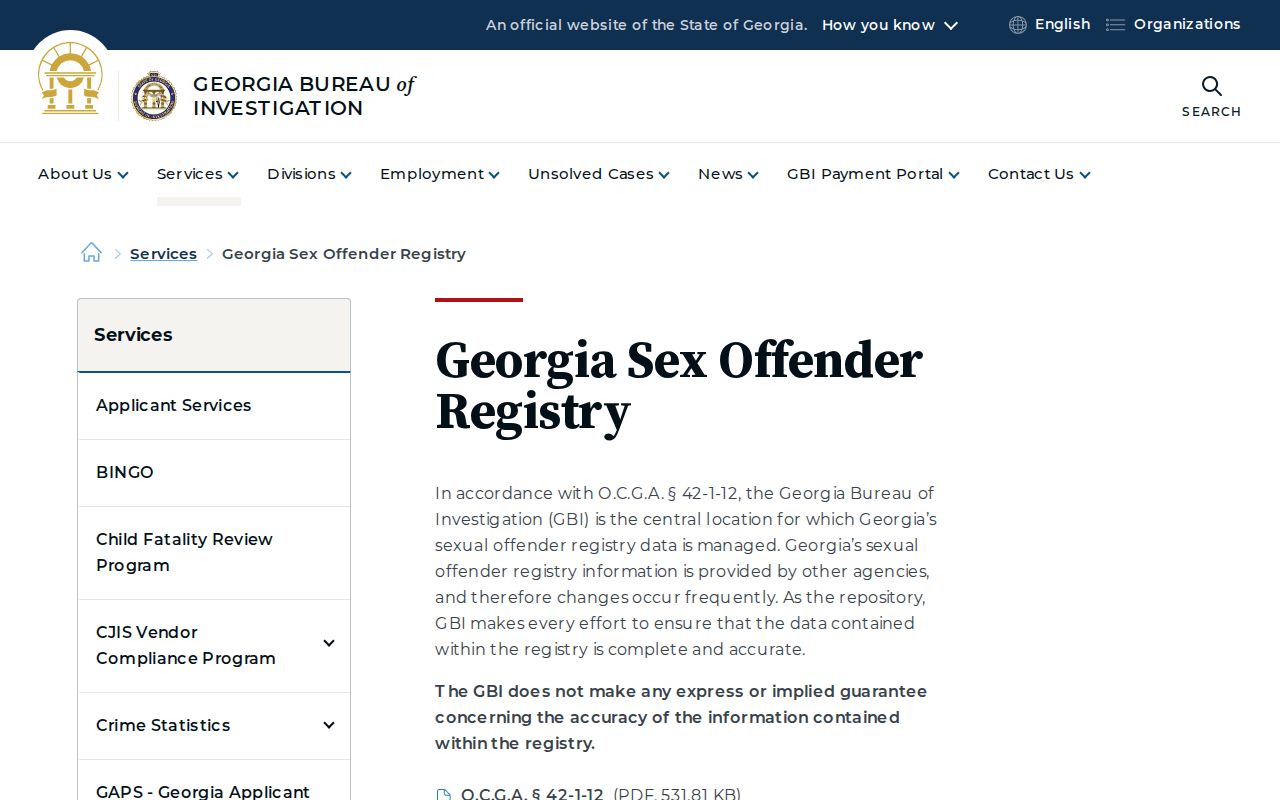
Use the result list to open a full profile, then compare the name, physical traits, addresses, offense information, registration county, and last update.
Georgia Sex Offender Registry Searches
A Richmond County registry search works best as a short, repeatable process. Save no private profile data beyond what is needed for a lawful safety concern, and return to the live system for updates.
- Open the official Georgia registry and read or accept its conditions of use.
- Choose a name search or a geographic search. Enter Richmond as the county, or use Augusta, Hephzibah, Blythe, ZIP, street address, and radius only as the live form allows.
- Review the results and distinguish people with aliases, age, physical description, registration county, and address details.
- Open the profile and check the status, risk classification if assigned, offense, conviction place and date, address, and update or verification information.
| Field label | Control | Required | Use |
|---|---|---|---|
| Last name | Text | Search dependent | Use full or partial text only as the live form permits. |
| First name | Text | Optional | Narrows a same-surname result. |
| County | Dropdown | Geographic mode | Select Richmond rather than relying on a city label. |
| City and ZIP | Text or dropdown | Optional | Use Augusta, Hephzibah, or Blythe with care. |
| Street address | Text | Geographic mode | Follow the live format and geocoding notice. |
| Radius | Dropdown | Geographic mode | Choose only from the mile options the current interface displays. |
Richmond County Sheriff Registration
RCSO is the local registration and verification link, while GBI is the central publisher. A qualifying conviction, release or supervision event, or move into Georgia triggers duties set by state law. The person registers with the designated sheriff, the sheriff submits or updates the data, and the public profile changes as the state system processes it. Verification and change reports continue after the first registration.
That division explains why a recent move or new registration may not be visible at once. Suspected noncompliance should go to RCSO or GBI with a clear factual basis. Social-media confrontation is not a compliance tool. The sheriff and state can compare nonpublic records and determine whether the law requires action.
Note: Registration status describes reporting compliance, not whether a Richmond County registrant is currently in jail or prison.
Registry Profiles: What They Show
A Georgia profile combines identification, address, conviction, and registration data. Each field answers a narrow question. Risk classification reflects an assessment by the Sexual Offender Registration Review Board, while registration status concerns reporting. An offense label may arise under Georgia, another state, federal, military, tribal, or territorial law.
| Name and aliases | Published identity names used to help distinguish a record. |
|---|---|
| Photo and description | Photograph, sex, race, age or birth data, height, weight, hair, eyes, and identifying marks where displayed. |
| Registered addresses | Primary or secondary address and Richmond County registration location, subject to reporting and update dates. |
| Offense information | Description or statute, conviction date and place, and victim category where lawfully displayed. |
| Risk classification | Level I, Level II, sexually dangerous predator, or no published assignment as applicable. |
| Registration status | Compliance or other status and verification information, not a statement of current custody. |
| Other statutory data | Vehicles and other fields that Georgia law places in the registration record. |
Missing Richmond County Registry Entries
An empty result is not a safety guarantee. GBI's official registry FAQ explains why a searched person may not appear. The person may be deceased or removed, may not have a legal duty to register, may be newly registered but not yet submitted, may have completed First Offender treatment successfully, or may have been searched with the wrong name or county. Juveniles do not register unless tried and convicted as adults.
The official FAQ image below captures the state source for these limits. It helps keep a Richmond County search from being read as a full criminal-record check.
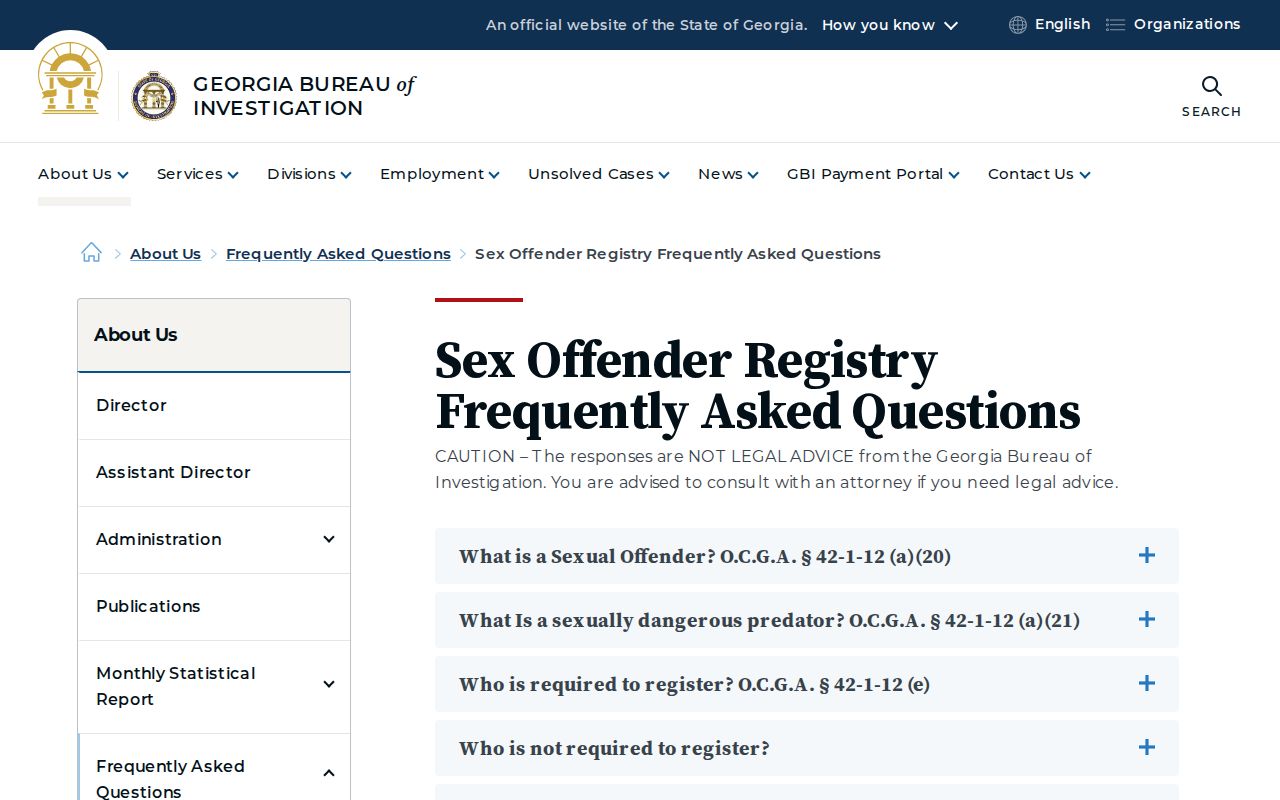
Try a known alias, correct the county or city, and use interstate coverage when the history crosses a state line. Report a likely data error through official channels.
Registration Levels and Duties in Georgia
Georgia uses risk classifications under O.C.G.A. §42-1-14. These are not federal SORNA Tier I, II, and III labels, and they do not create a simple 10-year, 25-year, or lifetime public ladder. Registration is generally for life under §42-1-12, subject to statutory petition and removal routes. A Richmond County profile alone cannot establish eligibility for release from registration requirements.
| Georgia classification | Meaning | Duration and visibility |
|---|---|---|
| Level I | Risk assessment category assigned under Georgia standards. | Registration is generally life; classification alone does not set a shorter term. |
| Level II | Higher assessed risk category under the state review process. | Registration is generally life, subject to Georgia's statutory relief process. |
| Sexually dangerous predator | Specific Georgia classification based on the statutory assessment process. | Public duties and duration follow Georgia law, not a federal tier chart. |
GBI's FAQ and O.C.G.A. §§42-1-12 and 42-1-19 control duration and any petition route. Verification frequency and duties depend on the applicable statute and status, not merely the level name.
Cross-State Richmond County Searches
The Savannah River makes interstate checking especially useful in Richmond County. A Georgia-only query can miss a person registered in South Carolina or elsewhere. The U.S. Department of Justice's National Sex Offender Public Website, or NSOPW, searches participating jurisdiction registries and routes the reader back to source records.
The national search screen below is an official second layer, not a replacement for the detailed Georgia profile.
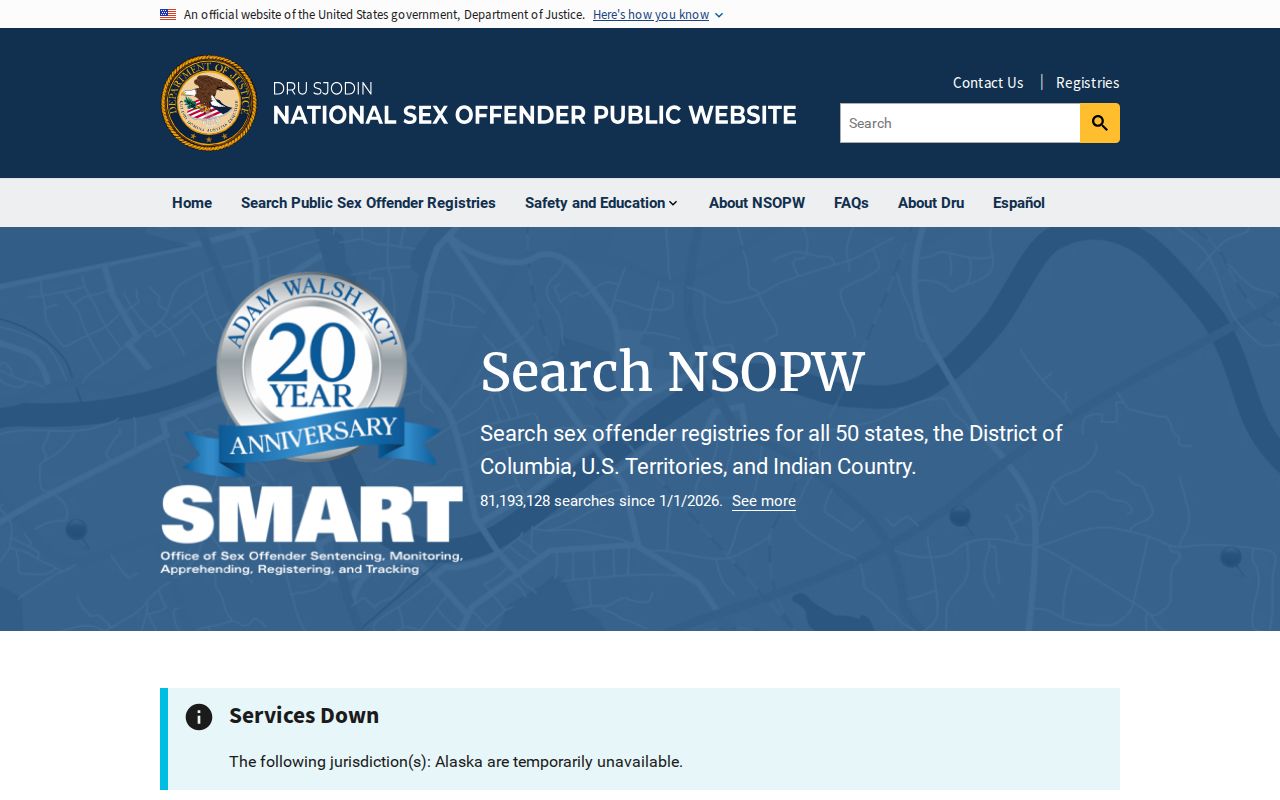
When a registrant moves out of Georgia, state law requires notice to the last Georgia sheriff and registration in the new jurisdiction within 72 hours after establishing residence. Check both the prior and current jurisdiction when timing is unclear.
Verify Richmond County Offense Records
A registry offense description is a public summary, not the complete case file. The conviction date, court, statute, and place help identify the source. Richmond County convictions should be checked with the local clerk. A federal conviction requires the federal court system, and an out-of-state conviction belongs to that jurisdiction's court.
The official PACER interface below is relevant only when a profile points to a federal case. It should not be used as a substitute for the Georgia registry.
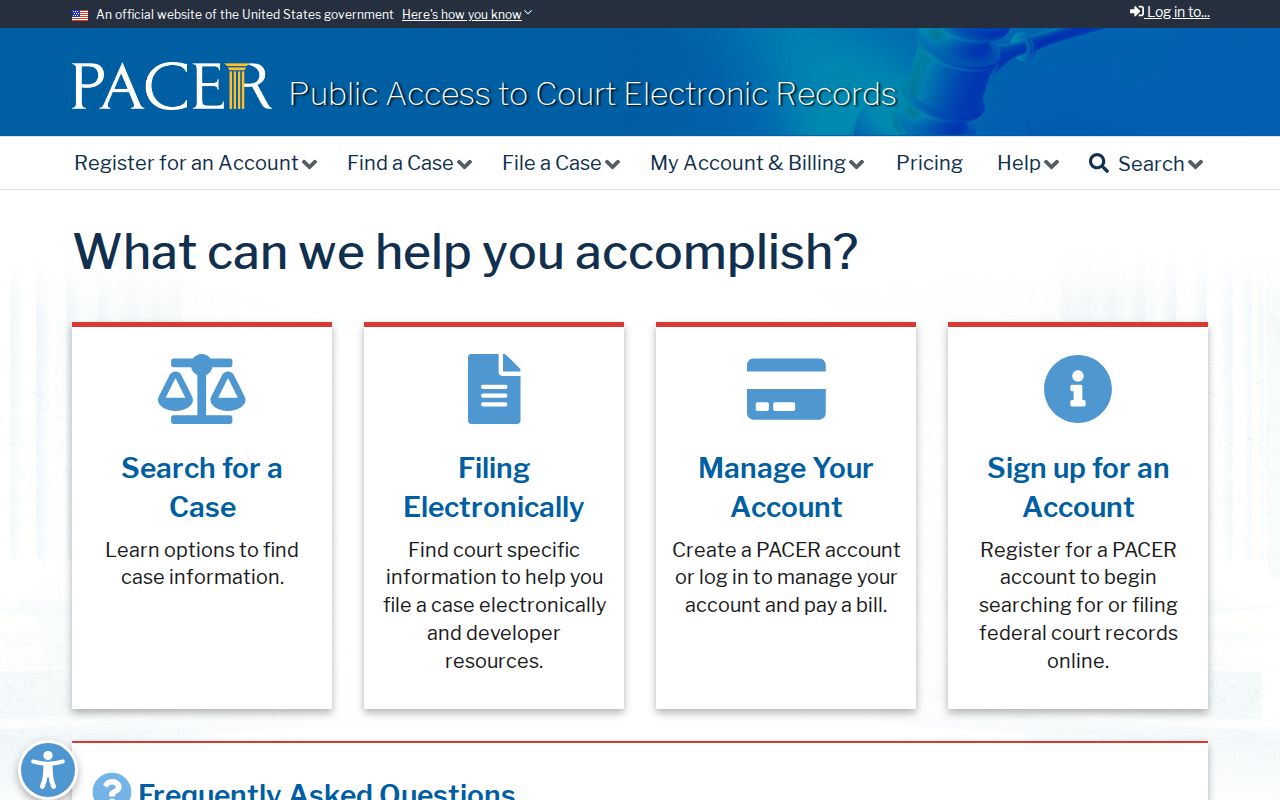
Match the court and case before drawing a conclusion. Offense-date rules can also affect duties, including the 1,000-foot restriction in O.C.G.A. §42-1-16 for specified date cohorts and places.
Richmond County Registration Timeline
A Richmond County registration begins with a conviction that meets Georgia law. The next trigger may be release, probation, parole, or a move into Georgia. The person then reports to the designated sheriff within the period set by statute. RCSO submits the Richmond County registration or change to GBI, and the state profile updates after processing. Later address, status, and verification events follow the same local-to-state path.
Moving does not end the duty. A person leaving Richmond County for another Georgia county must follow the reporting rules that apply to the change. A person leaving Georgia must notify the last Georgia sheriff and register with the new state's agency within 72 hours after establishing residence. Searchers should therefore check the Richmond County profile's reported address and date, then search the new jurisdiction if a move is known.
Georgia residency and work restrictions turn on the offense date, covered place, and statutory exceptions. O.C.G.A. §42-1-16 contains a 1,000-foot rule for specified date groups and locations, with serious penalties for a knowing violation. A map result alone cannot decide whether a Richmond County address violates that law. Send a fact-based concern to RCSO or GBI so the agency can check dates, measurements, exceptions, and current registration records.
Using Registry Information Lawfully
Registry data is for awareness and safety planning. Confirm identity with several fields, check the update date, use NSOPW for interstate coverage, and report suspected errors or violations to RCSO or GBI. Do not trespass, contact, threaten, shame, intimidate, or organize harassment. A map point is reported registration information and may be affected by geocoding or update timing.
Use is restricted: O.C.G.A. §42-1-12 states that using registry information to harass or intimidate a registrant is prohibited and punishable by law.
For Richmond County community awareness, treat the registry as one source among normal safety steps. Let law enforcement investigate noncompliance. A public profile does not authorize personal surveillance or confrontation.