
Criminal Court Cases in Richmond County
Richmond County divides criminal work by charge level and stage. Superior Court hears felonies in the Augusta Judicial Circuit, which joins Richmond and Burke Counties and has five Superior Court judges. State Court handles misdemeanors, DUI cases, and traffic matters. Magistrate Court conducts warrants, first appearances, and preliminary hearings. A municipal court may hold its own ordinance or qualifying traffic file.
The Clerk of Superior, State and Juvenile Court keeps filed Richmond County cases at the Augusta-Richmond County Judicial Center, 735 James Brown Boulevard, Suite 1500, Augusta, GA 30901. The main number is 706-821-2460. Choose option 3 for felony records and option 4 for misdemeanor or misdemeanor-citation records. Juvenile files are routed through the same elected clerk but are not ordinary public adult criminal cases.
Richmond County Felony and Misdemeanor Files
The court name is the first useful filter. A Richmond County felony generally moves from Magistrate proceedings to Superior Court after prosecutor or grand-jury action. A misdemeanor can be filed by accusation in State Court. The Solicitor prosecutes those State Court matters, including DUI, theft, domestic violence, traffic, and other non-traffic misdemeanors. The clerk, not the prosecutor, is the custodian for the public docket and filed copy.
The official Richmond County State Court Solicitor page shows the local misdemeanor office and its scope.
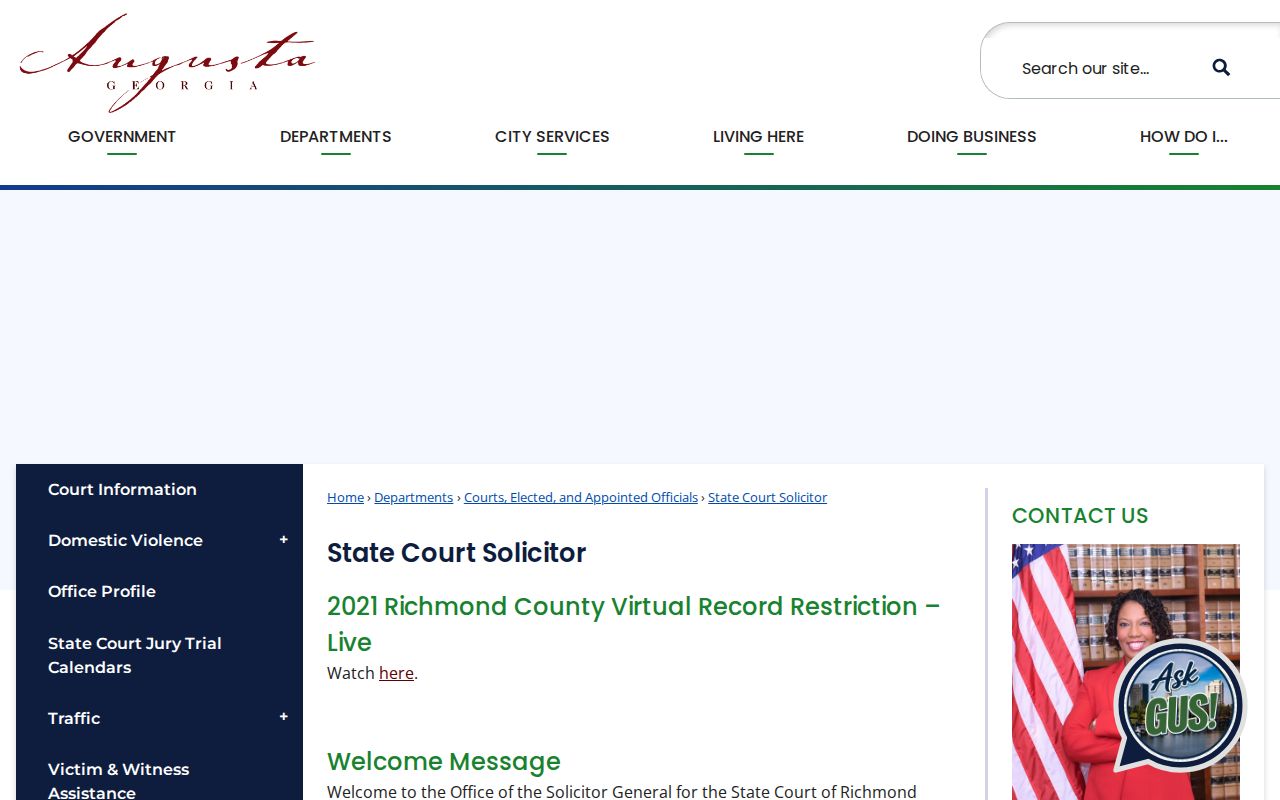
The office has reception and case coordination, arraignment, domestic-violence arraignment, traffic arraignment, and victim-witness functions. Its stated workload includes traffic and citation matters, so the total must not be read as a count of convictions or unique people.
Richmond County Case Record Searches
Use the state directory as an index, then use the clerk for the authoritative Richmond County file. Online images can be gated, incomplete, or unavailable. A party name or case number is the best starting point when the provider exposes it.
- Open the Georgia Judicial Council E-Access to Court Records directory and select the Richmond Superior listing.
- Create the provider account the directory says is required, then use a party name or case identifier if the live system offers those fields.
- Confirm the court, division, filing year, case type, and status before treating a same-name result as the right Richmond County case.
- Open the docket and read the entries in date order. Check charging, plea, disposition, and sentence events separately.
- Call or visit Suite 1500 for printed or certified records, older files, and public documents that the provider does not display.
| Search field | Control | Required | Richmond County use |
|---|---|---|---|
| Party name | Text, if exposed | Search dependent | Match the court and case details before relying on a name. |
| Case number | Text | Best exact key | Use the full clerk-assigned identifier when known. |
| Court or division | Select | Usually needed | Separate Richmond Superior felony files from State Court matters. |
| Filing year | Date or select, if exposed | Optional | Narrows a common-name result and helps locate older dockets. |
| Case type or status | Select, if exposed | Optional | Use as a lead, then verify the filed Richmond County record. |
Why Richmond E-Access Is Gated
The Georgia court e-access directory is not one complete statewide court database. It sends users to participating court or vendor systems. The Richmond Superior entry warns that an account is required. That makes the directory useful for finding the correct provider, but it does not guarantee that every pleading or image can be opened online without an account.
The official directory capture below shows the Richmond County route and the account model.
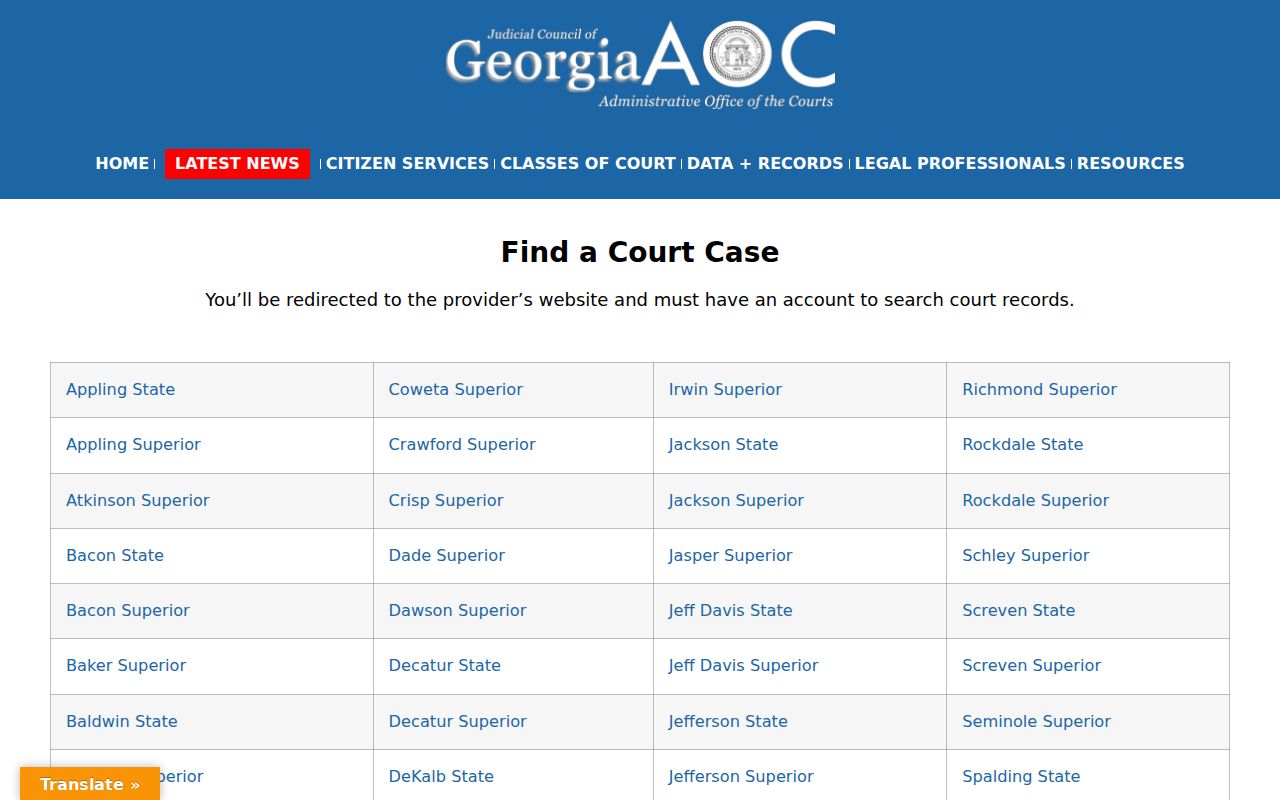
When a docket appears but an image does not, ask the clerk for the exact document by case number and filing date. Printed public records are available through Suite 1500. Confirm copy or certification costs with the clerk because the research did not establish a stable fee schedule.
What a Criminal Case File Contains
A Richmond County criminal file records prosecution, not just arrest. It may begin with an accusation or indictment, then collect the docket events that show what the lawyers and court filed. Online indexes often summarize those events. The paper or imaged file may contain the underlying documents, subject to access rules and redaction.
| Case number and court | The identifier, trial court, division, filing date, case type, and status. |
|---|---|
| Parties and lawyers | Defendant display, State of Georgia, defense attorney, and prosecutor fields where public. |
| Charging document | Accusation or indictment date, charge description, statute, and severity. |
| Docket and hearings | Filed motions, orders, hearing dates, arraignment, trial, and other dated events. |
| Plea and verdict | The answer to charges and any verdict or other charge-level outcome. |
| Judgment and sentence | Disposition, sentence, probation, fines, fees, restitution, and linked orders where shown. |
| Warrants and bond | Case-linked process and release terms, which are not themselves a final disposition. |
Dates of birth, Social Security numbers, protected victim information, and details about minors can be removed from the public view. Document availability also varies by file and provider.
Read Richmond County Docket Terms
Short docket labels can change the meaning of a result. Read them at the charge level because one Richmond County case can contain several counts with different outcomes.
- Accusation
- A prosecutor's formal charging document, commonly used for State Court misdemeanors.
- Indictment
- A grand jury's true bill that formally charges one or more offenses.
- No-bill
- A grand jury decision not to indict the proposed charge.
- Nolle prosequi
- A prosecutor's formal decision not to proceed with a charge.
- Dead docket
- A case postponed indefinitely by court order, not the same as an acquittal.
- Disposition
- The outcome recorded for the case or an individual charge.
Bond is also easy to misread. It describes release security or conditions, not guilt. A bench warrant can arise from a missed court event. Neither field tells the reader how the Richmond County charge ultimately ended.
Criminal Case Stages in Richmond County
A Richmond County case can begin with an arrest or citation. Magistrate Court may conduct first appearance and a preliminary hearing. The prosecutor then decides whether to file an accusation or seek a grand-jury indictment. Arraignment gives formal notice and takes a plea. Discovery, motions, negotiation, or trial follow. Judgment and sentencing come only after the court resolves the charge.
Case flow: Charges Filed → Arraignment → Pretrial → Plea or Trial → Disposition → Sentencing
The Augusta Judicial Circuit District Attorney FAQ confirms local grand-jury work, arraignment and non-jury days, Magistrate preliminary appearances, accountability courts, and appeals.
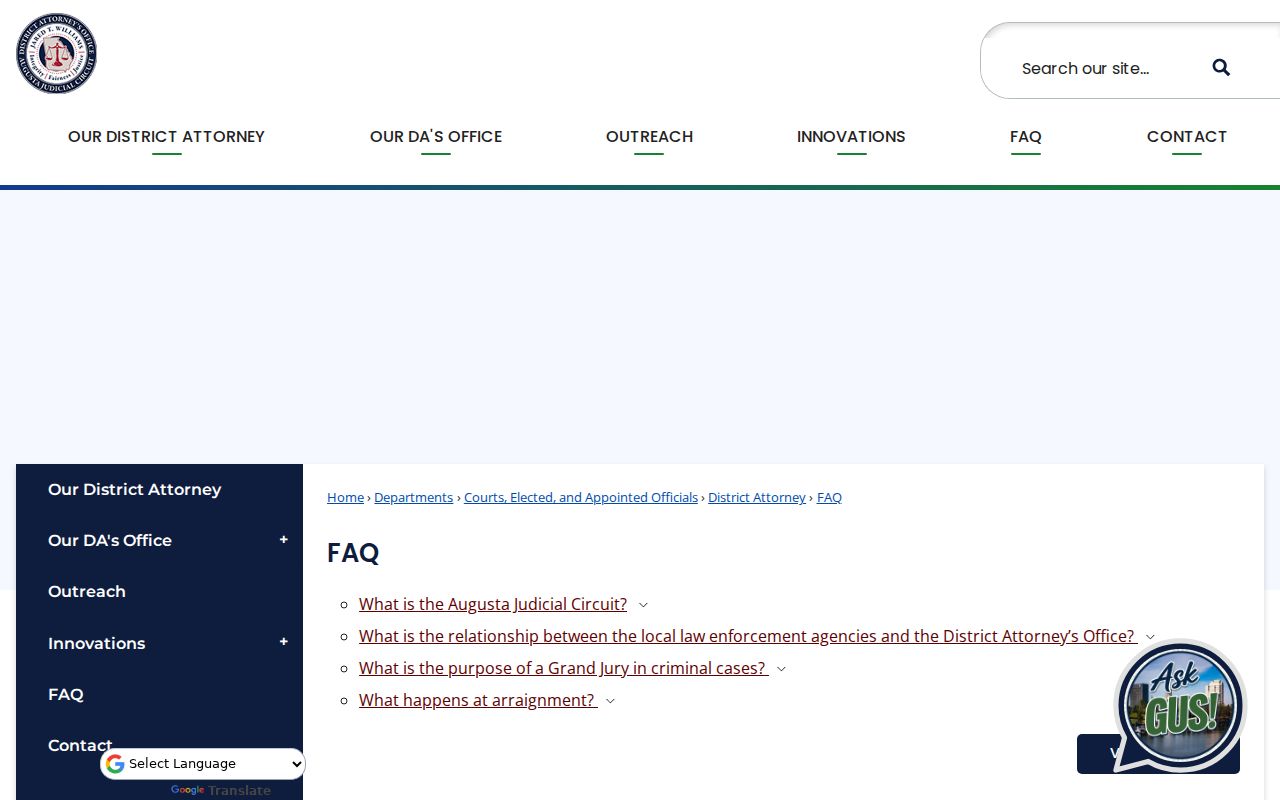
The captured official source places those steps in the Richmond County felony process. Exact timing depends on the case, so no fixed duration should be inferred from the sequence.
Five Judges Across Richmond and Burke
The Augusta Judicial Circuit covers Richmond and Burke Counties and is served by five Superior Court judges. That circuit structure does not merge each county's files. A Richmond County felony still belongs with the Richmond clerk, even when a circuit judge serves both counties. State Court is separate and publishes its own bench contacts.
The official Richmond State Court judges page shows the current bench and direct chambers contacts.
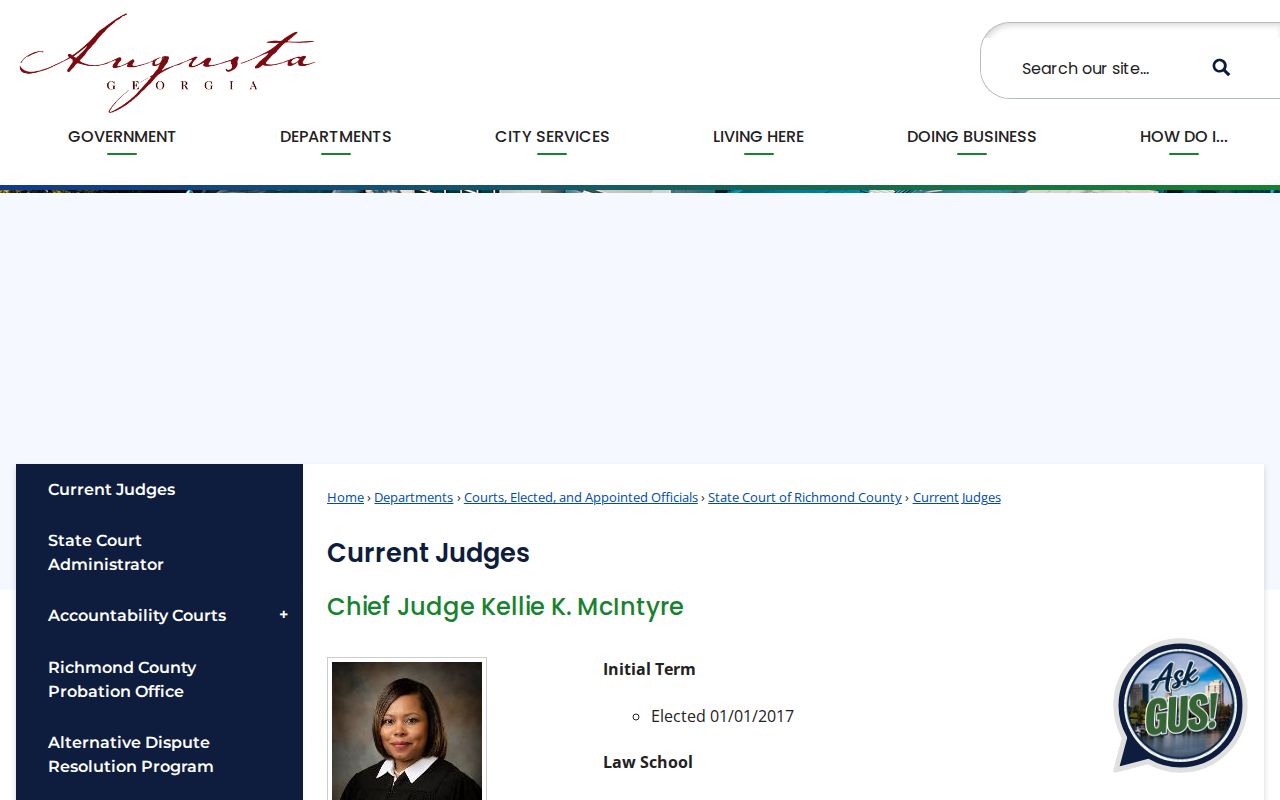
Contact chambers only for the function identified by the court. Record copies and docket questions stay with the clerk. A judge's contact page is not a substitute for a Richmond County case search.
Access Rules for Case Records
The Georgia Open Records Act, O.C.G.A. §§50-18-70 through 50-18-77, presumes agency records open unless an exemption applies. Court access also reflects judicial rules and case-specific orders. Public Richmond County files can still redact Social Security numbers, financial-account data, protected victim information, and details involving minors. Juvenile files and sealed material are not ordinary adult public court records.
Georgia record restriction under O.C.G.A. §35-3-37 limits ordinary dissemination of an eligible GCIC arrest cycle but does not destroy every file. A separate court sealing order may be needed to shield the clerk's record. First Offender sealing follows O.C.G.A. §§42-8-60 through 42-8-63.1. If a docket is missing from an online search, ask the clerk whether it is older, gated, sealed, indexed differently, or available only as a printed file.
A Georgia Open Records Act response generally comes within three business days, but that deadline does not promise full production in three days. An office may acknowledge the request, seek a clearer description, cite an exemption, estimate permitted costs, or state when the Richmond County court record will be ready. A focused request should name the court, case number, document, and filing date instead of asking for every record tied to a person.
Access point: Use the clerk for the filed Richmond County case, and use GCIC channels only for the separate statewide criminal-history record.
Richmond County Counsel and Case Access
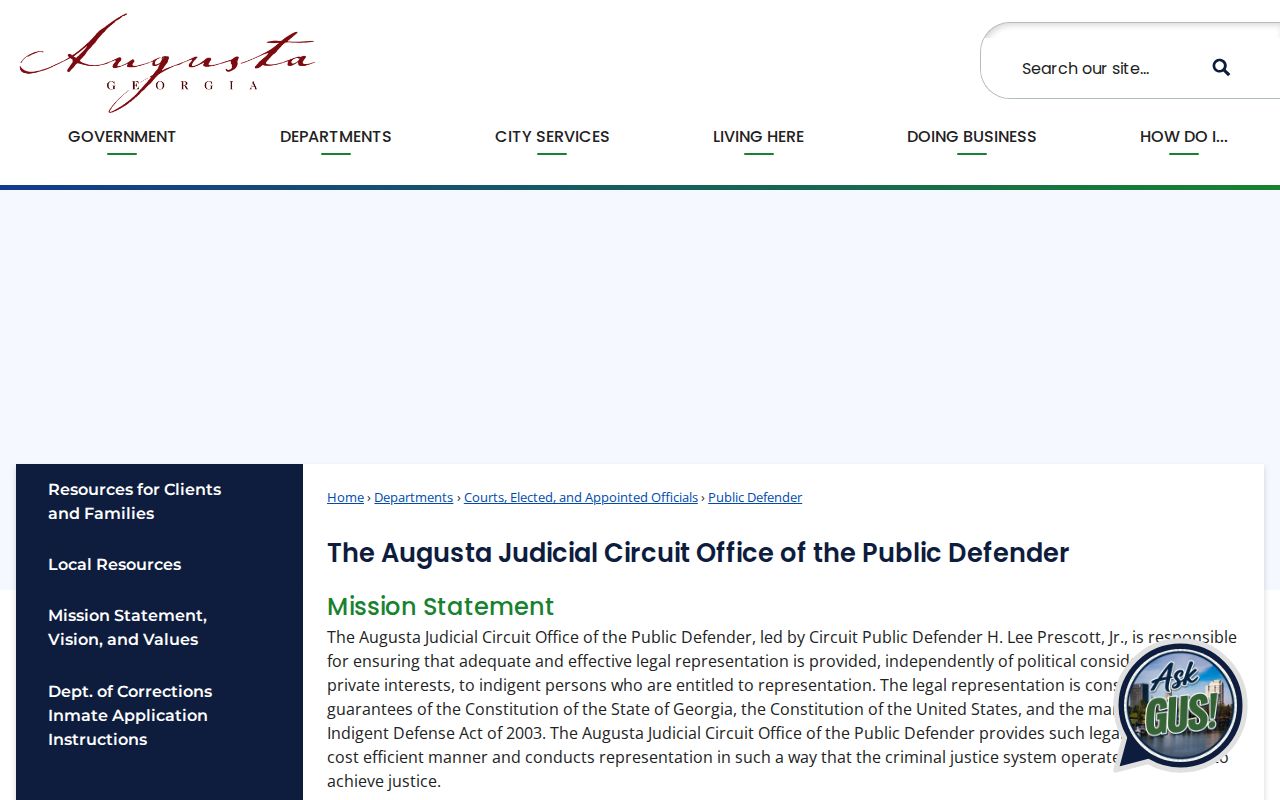
Public access to a docket is not legal representation. The Augusta Judicial Circuit Public Defender accepts applications for Richmond Superior, State, and Magistrate criminal or traffic cases from people seeking appointed counsel who may qualify. Its office is at 902 Greene Street, Augusta, GA 30901, with phone 706-312-5105 and published hours of 8:30 a.m. to 5:00 p.m.
The official Public Defender page describes the Richmond County courts it serves and the application channel.
The office expects a qualification response within two business days. That timing concerns the application response, not the length or result of a Richmond County criminal case.
Note: Obtain the case number and next court date from the clerk or docket before contacting a case-related office.